
ChatGPT for Doctors: How Physicians Can Use AI in Clinical Practice
Discover six ways doctors can use ChatGPT and AI in clinical practice, from medical research and patient communication to AI scribes and documentation.



Popular articles
Artificial intelligence is becoming an increasingly useful part of the physician workflow. Doctors are using tools such as ChatGPT, generative AI platforms, and ambient AI medical scribes to research clinical questions, improve patient communication, draft administrative content, and reduce time spent on documentation.
Used appropriately, AI can support physicians without replacing clinical judgment. The key is understanding which tasks are well suited to general-purpose AI tools and which require healthcare-specific technology with appropriate privacy and security protections.
What Is ChatGPT?
ChatGPT is a generative artificial intelligence tool created by OpenAI. It uses natural language processing to understand questions and generate conversational responses, summaries, explanations, drafts, and other written content.
OpenAI first released ChatGPT publicly in November 2022. Since then, ChatGPT and similar generative AI tools have expanded significantly in their capabilities and use across healthcare and other industries.
The name GPT stands for Generative Pre-trained Transformer:
- Generative: The model creates new content in response to a prompt.
- Pre-trained: The underlying model is trained on large amounts of information before being made available to users.
- Transformer: This refers to the neural-network architecture used to process relationships and context within language.
In practical terms, ChatGPT allows physicians to ask questions or provide instructions in everyday language and receive a useful written response within seconds.
Other commonly used generative AI platforms include Google Gemini and Microsoft Copilot. Healthcare-specific AI tools are also becoming increasingly common, particularly for clinical documentation.
Can Doctors Use ChatGPT in Clinical Practice?
Yes, when used appropriately. ChatGPT and other generative AI tools can assist physicians with research, communication, administrative tasks, and organizing information.
However, healthcare professionals should not enter protected health information (PHI) into ChatGPT accounts or other AI tools that have not been specifically approved for handling patient information.
Under HIPAA, cloud services that process electronic PHI on behalf of covered entities generally require appropriate safeguards and a Business Associate Agreement (BAA).
Best Practices for Physicians Using AI
- Never enter identifiable patient information into ChatGPT or other general AI tools.
- Use hypothetical or appropriately de-identified examples when exploring clinical questions.
- Verify clinical information using authoritative medical sources.
- Review AI-generated content before using it in patient care or documentation.
- Follow organizational AI policies and maintain independent clinical judgment.
6 Ways Doctors Can Use ChatGPT and AI Tools
1. Research Clinical Questions and Organize Differential Diagnoses
Physicians can use generative AI to organize clinical information and explore possible considerations related to a case.
For example:
- “What are common causes of acute vertigo in adults?”
- “What laboratory tests are commonly considered when evaluating new-onset anemia?”
- “Summarize the diagnostic criteria for Sjögren syndrome.”
- “What factors should be considered in the differential diagnosis of persistent cough?”
AI can be especially useful for organizing ideas or identifying topics for further investigation.
However, generated answers can contain errors or omit important context. Physicians should confirm clinically important information using current guidelines, peer-reviewed literature, drug databases, or other trusted medical sources.
2. Summarize Medical Research and Guidelines
One of the most useful applications of AI for physicians is quickly organizing complex information.
Doctors can ask AI tools to:
- summarize long research articles
- explain unfamiliar medical concepts
- compare guideline recommendations
- identify key points from published research
- turn technical material into a concise outline
Healthcare-focused AI tools are increasingly incorporating clinical search and citation features, helping physicians locate relevant medical literature and guidelines. However, clinicians should still review the original sources and independently verify information before making clinical decisions.
3. Review Medication Information
Generative AI can help organize information about medications, including:
- common adverse effects
- potential contraindications
- drug classes
- monitoring considerations
- possible drug-drug interactions
However, AI should not replace a dedicated drug interaction database, prescribing information, pharmacist consultation, or other validated medication resource.
Always confirm medication-related information using an authoritative clinical source before making treatment decisions.
4. Practice Difficult Patient Conversations
AI can also serve as a useful communication rehearsal tool.
Physicians can ask ChatGPT to simulate common patient questions or help them think through ways to explain sensitive topics involving:
- cancer diagnoses
- chronic illness
- chronic pain
- mental health
- weight and nutrition
- serious illness
- end-of-life care
- treatment risks and benefits
For example, a physician might ask:
“Give me three clear ways to explain this diagnosis to a patient without using medical jargon.”
Or:
“What questions might a patient ask after being told they need long-term anticoagulation?”
This type of preparation can help clinicians anticipate concerns and communicate complex information more clearly.
5. Draft Patient and Administrative Communication
Physicians spend substantial time writing content that is necessary but not always clinically complex.
Generative AI can help create first drafts of:
- patient education materials
- referral letters
- insurance appeals
- prior authorization letters
- letters of medical necessity
- email responses
- internal policies
- staff instructions
Physicians can also ask AI to adjust tone or reading level.
For example:
“Rewrite this explanation at an eighth-grade reading level.”
Or:
“Make this patient message more concise while keeping the tone empathetic.”
AI-generated drafts should always be reviewed before they are sent or added to a medical record.
6. Automate Clinical Documentation With an AI Medical Scribe
One of the most practical healthcare applications of generative AI is ambient AI medical scribing.
Unlike a general-purpose chatbot, an ambient AI scribe is designed specifically for clinical documentation. It captures clinician-patient conversations and generates structured clinical notes for physician review, reducing the need for manual documentation.
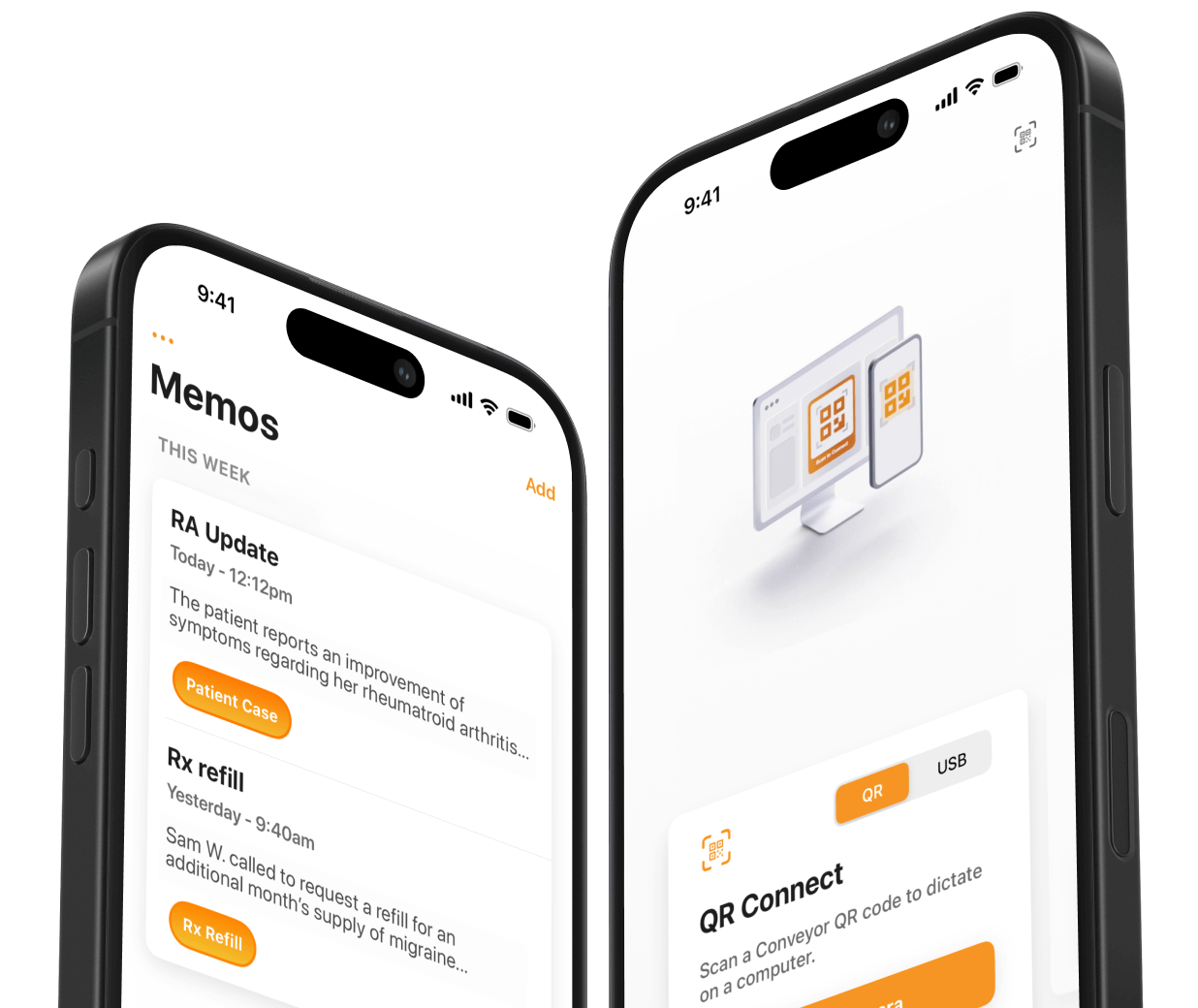
Mobius MD's Conveyor AI combines ambient AI scribing with medical dictation and works with most EMR workflows on Mac and Windows computers. AI-generated notes are typically ready for physician review within seconds, allowing providers to quickly review, edit, and transfer documentation into their medical records.
By capturing documentation during the encounter, ambient AI scribing allows physicians to focus more on patient interactions rather than manually documenting every detail.
To learn more, see How Ambient AI Scribe Technology Is Revolutionizing Medical Documentation.
ChatGPT vs. an AI Medical Scribe
Although both use generative AI, ChatGPT and an ambient medical scribe serve different purposes.
For physicians whose main concern is reducing documentation time, a purpose-built AI medical scribe may be more practical than manually prompting a general AI chatbot after every visit.
Limitations of ChatGPT in Healthcare
While generative AI can be a valuable tool for physicians, it is important to understand its limitations.
AI-generated responses may:
- Contain inaccurate or fabricated information presented confidently
- Omit important clinical context
- Rely on incomplete or outdated medical information
- Misinterpret questions or instructions
These limitations make independent verification essential when using AI in clinical practice.
Why Physicians Should Learn to Use AI Now
As AI becomes more common in clinical practice, understanding where it can improve efficiency is increasingly valuable for physicians.
One of the most practical applications is ambient AI scribing, which can help reduce the time spent documenting patient encounters.
A 2026 multisite study published in JAMA, involving more than 8,500 clinicians across five academic healthcare institutions, found that AI scribe adoption was associated with approximately 16 fewer minutes of documentation time per eight hours of scheduled patient care. Researchers also found greater reductions among clinicians who used AI scribes more frequently.
With a growing number of AI medical scribes available, physicians have more options than ever for finding a tool that fits their workflow. For those considering Conveyor AI, clinicians share their firsthand experiences, including improvements in documentation efficiency, easier note completion, and more time to focus on patient care.
FAQ: ChatGPT and AI for Doctors
Is ChatGPT safe for doctors to use?
ChatGPT can be useful for research, drafting, and administrative tasks when used appropriately. Physicians should verify clinically important information and follow their organization's policies for AI use.
Can doctors put patient information into ChatGPT?
Healthcare professionals should not enter protected health information (PHI) into standard ChatGPT accounts or other AI tools.
When using general-purpose AI tools, physicians should never include identifiable patient information; instead, use hypothetical or appropriately de-identified examples.
For more information, see HHS guidance on cloud services and HIPAA.
How does an AI medical scribe work?
An ambient AI medical scribe captures clinician-patient conversations during an encounter and uses artificial intelligence to generate a structured clinical note. The physician can then review and edit the AI-generated note before adding it to the patient's electronic medical record.
Unlinke general-purpoe AI tools, medical scribes are designed specifically for clinical workflows and should provide HIPAA-compliant safeguards for handling sensitive patient information. Healthcare professionals should verify that the software meets privacy and security requirements and that an appropriate Business Associate Agreement (BAA) is in place.
Can AI tools reduce documentation time for physicians?
Yes. Studies have found that ambient AI scribes can reduce physician documentation time by generating structured clinical notes from patient encounters. Actual time savings vary depending on the provider, clinical setting, and documentation workflow, but these tools can help reduce manual charting and administrative burden.
Related Articles






Contact us
We proudly offer enterprise-ready solutions for large clinical practices and hospitals.
Whether you’re looking for a universal dictation platform or want to improve the documentation efficiency of your workforce, we’re here to help.