
Dictation Software for Medical Professionals: How AI Dictation Will Help Medical Professionals in 2026
Explore how AI dictation is transforming documentation in 2026—faster notes, fewer clicks, better accuracy, and less burnout for medical professionals.




Popular articles
There's a particular kind of tired that doesn’t come from seeing patients—it comes from documenting them. Not the meaningful parts (the story, the reasoning, the plan), but the endless "administrivia": retyping the same counseling lines, chasing the right field in the EHR, correcting medication names, and turning a natural human conversation into something that fits a template.
That's why dictation software for medical professionals is having a real moment in 2026.
Not because clinicians suddenly discovered voice-to-text. Plenty tried it years ago. The shift is that dictation has finally started to feel like it belongs in clinical workflow—less like a gadget and more like a dependable input method, the way a keyboard is dependable. AI has changed the equation: dictation is faster, more accurate, more context-aware, and (when implemented well) less annoying.
This article is about what that looks like on the ground: how AI documentation helps, where it still needs guardrails, and why 2026 might be the year clinicians stop saying "I’ll finish my notes later."
The old promise vs. the new reality
Classic dictation tools promised: speak instead of type.
In real life, many clinicians experience: speak, then spend half the time fixing it. Or worse: speak in one box, paste into another, and lose formatting. The friction wasn't always accuracy—it was workflow.
AI dictation in 2026 is different in two important ways:
- It's better at medical language.
Drug names, anatomy, procedures, and specialty jargon are less of a daily battle. - It's more "workflow native."
The best tools aren't trying to force you into their interface. They're trying to work wherever you're already charting, inside the EHR, in messages, in forms, even in the little text boxes you didn't realize were eating 30 minutes a day.
When voice becomes reliable and easy to use, clinicians don't "use dictation." They just… talk.
How AI dictation helps in 2026 (in ways that actually matter)
1) It reduces the "click tax" in modern EHRs
EHRs are powerful, but they're not built for speed. They're built for structure, compliance, and billing realities—often at the expense of a clinician's time.
AI dictation helps because it sidesteps the click tax. You can dictate:
- The HPI narrative, while skimming prior notes
- The assessment and plan while orders are being placed
- Quick clarification message to a patient
- Referral request to another department
Instead of navigating a maze of fields, you place your cursor and speak. That's not just convenience—it's fewer context switches, which means less cognitive fatigue.
2) It fights documentation "fragmentation"
Clinical documentation isn't one task. It's dozens of micro-tasks spread across a day:
- "quick note" for a phone call
- Addendum after a lab result
- Portal message response
- Prior auth justification
- Pre-op clearance letter
Typing each one is a paper cut. AI dictation turns those paper cuts into something closer to a single motion: speak, review, send.
For many clinicians, the biggest win isn't saving 10 minutes on the main note. It's saving 2 minutes, fifteen times a day.
3) It makes notes sound more human (and more readable)
When documentation is typed under pressure, it tends to become either:
- Too short to be useful, or
- Too templated to be readable.
Dictation changes the tone. Spoken language naturally carries clarity and sequencing—what happened, what changed, what you think, what you’ll do next.
AI dictation improves this further by cleaning up the rough edges: punctuation, capitalization, and formatting. The result is often a note that reads like a clinician actually wrote it—because, in a sense, they did.
4) It supports consistency without forcing sameness
Clinicians want notes to be consistent, but they don't want to feel like robots.
In 2026, dictation tools increasingly support macros, templates, and custom vocabulary—the pieces that remove repetition without removing personality. You can quickly insert:
- counseling language
- return precautions
follow-up intervals - standard exam norms (when appropriate and accurate)
But you still speak the parts that should be specific: the patient's story, the nuance, the rationale.
This is where dictation stops being "voice-to-text" and becomes a documentation system.
5) It helps clinicians stay present with patients
The patient experience changes when the clinician isn't typing constantly.
Even if you're still documenting during the visit, dictation can reduce the "screen magnet." You can maintain eye contact, speak your plan aloud, and capture the note in the same breath.
This is one of the underrated benefits: dictation isn't just a productivity tool—it's a relationship tool.
The three "modes" of AI dictation clinicians will use in 2026
AI dictation isn't one workflow. In practice, clinicians use it in three modes—often on the same day.
Mode 1: Real-time dictation (the "talk as you chart" style)
Best for clinicians who like to document during the visit.
You speak your HPI as the patient talks, then summarize your plan while placing orders. This keeps charts current and reduces end-of-day backlog.
Mode 2: Post-visit dictation (the "two-minute wrap-up")
Best for busy clinics where visits are too brief for in-the-moment charting.
After the patient leaves, you dictate the note quickly while everything is still fresh. The key benefit here is speed and completeness.
Mode 3: Micro-dictation (the “inbox + forms + quick tasks” revolution)
This is the sleeper hit.
AI dictation shines in:
- portal messages
- refill clarifications
- work notes
- consult replies
- quick chart corrections
This is where dictation software for medical professionals becomes less about the "note" and more about the day.
What AI dictation still can't do (and what to watch)
AI dictation is better in 2026, but it's not magic. It has predictable weak points—and ignoring them is how people end up frustrated or unsafe.
1) Negations can still bite you
"Denies chest pain" vs. "has chest pain" is not a typo—it’s a clinical landmine.
Best practice: always scan symptom and ROS statements, especially negatives.
2) It can mishear numbers and doses
"Fifteen" vs. "fifty" is rare—but rare is not never.
Best practice: double-check dosages, frequencies, and durations.
3) It can produce "pretty" nonsense
AI can format something beautifully while still being wrong.
Best practice: don’t confuse readability with accuracy. Review the meaning.
4) Privacy and policy still matter
Voice workflows can involve sensitive data. Organizations need clear policies about devices, recordings (if any), data retention, and access.
Best practice: follow your org's compliance requirements and choose tools that match healthcare-grade expectations.
A practical checklist: choosing dictation software in 2026
If you're evaluating options, use questions that reflect real workflow—not marketing.
- Does it work where I actually chart?
Not just one big note box—every field, message, and form that matters. - How fast is the correction?
The best tools aren't the ones that never make mistakes; they're the ones that make fixing mistakes painless. - Can I personalize it?
Macros, templates, vocabulary, specialty language. If you can't personalize, you'll plateau. - Does it travel with me?
Different rooms, different computers, different settings. If it's hard to use anywhere, you won't use it everywhere. - Does it reduce burnout, not add steps?
If the workflow adds setup time, extra windows, or constant troubleshooting, it will fail—even if accuracy is high.
How to roll out AI dictation without chaos
If you're adopting dictation for yourself or an entire clinic, the biggest mistake is trying to change everything overnight.
Here's a rollout that works:
Week 1: Pick one use case
Choose a predictable note type (routine follow-up, annual exam, post-op check). Dictate only that.
Week 2: Add macros/templates
Create 5–10 macros you'll use constantly: return precautions, follow-up intervals, and standard counseling. This is where time savings become obvious.
Week 3: Expand to micro-dictation
Start dictating portal messages and quick tasks. This often produces the biggest "I didn’t realize I needed this" moment.
Week 4: Measure the right metric
Don't measure "words dictated." Measure:
- Time to close charts
- After-hours documentation minutes
- Editing time per note
- Subjective fatigue at the end of the day
AI dictation success is emotional as much as operational: it should feel lighter.
Where is this going next?
In 2026, AI dictation is moving from "transcribe my words" to "support my documentation."
Expect improvements in:
- smarter formatting based on your habits
- better handling of specialty vocabulary
- more seamless workflows across devices
- more helpful prompts for missing documentation elements (without adding noise)
The endgame isn't a note that writes itself. The endgame is a clinician who finishes work closer to on time.
A quick note on Mobius as an example of the 2026 shift
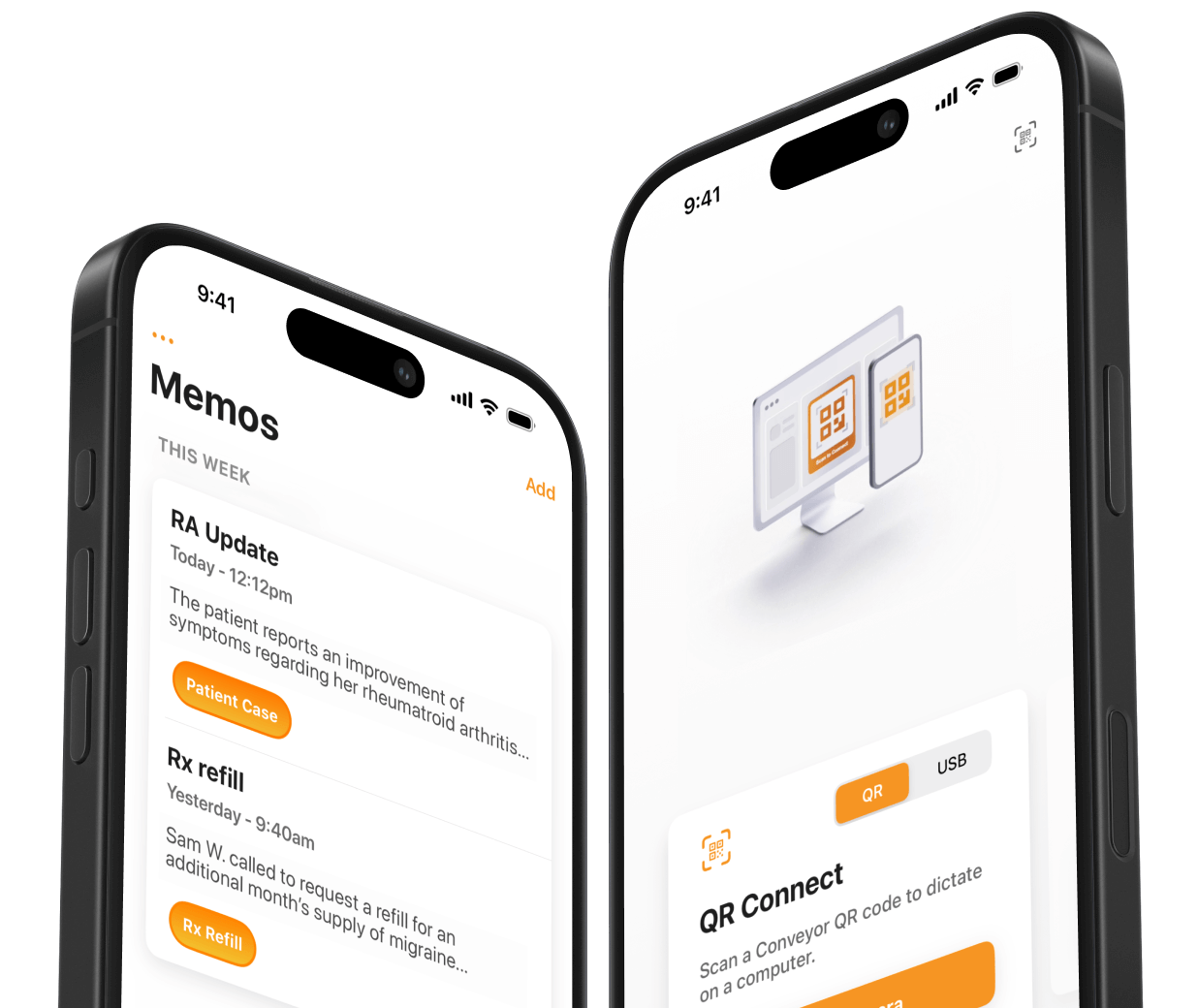
Some newer tools (Mobius MD is one example) are leaning into a "dictate anywhere you can type" philosophy—treating dictation like a universal input layer rather than something trapped inside a single interface. That design direction matches the biggest truth of clinical documentation: it happens everywhere, not just in the main note.
Whether you choose Mobius or another option, that's the bar to look for in 2026: workflow-first dictation.
Bottom line
Dictation software for medical professionals in 2026 isn't about novelty. It's about reclaiming time, attention, and energy.
AI dictation helps by reducing clicks, smoothing documentation fragmentation, improving note readability, and making it easier to keep charts current without stealing the human side of care. It’s not flawless—and it still requires review—but it’s finally becoming the kind of tool clinicians can rely on daily.
And that's the real change: dictation isn’t "one more thing" anymore.
It's becoming the default way busy medical professionals get words into the chart—quickly, accurately, and without sacrificing the moment happening in the room.
Related Articles






Contact us
We proudly offer enterprise-ready solutions for large clinical practices and hospitals.
Whether you’re looking for a universal dictation platform or want to improve the documentation efficiency of your workforce, we’re here to help.